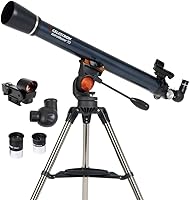
Celestron StarSense Explorer LT 80AZ vs 114AZ: Which Is Better? (November 2026)
Choose the LT 114AZ for its larger 114mm aperture; choose the LT 80AZ for a lighter refractor. Both use the StarSense Explorer app to guide you toward targets, so the main trade-offs are optical design, portability and setup space.
On this page (8 sections)
- Celestron StarSense Explorer LT 80AZ vs 114AZ: which should you choose?
- How does their aperture compare?
- Which optical design fits you better?
- Does StarSense work the same on both?
- What accessories and setup do they include?
- Which one is easier to carry and store?
- Are these telescopes good for beginners?
- Which Celestron StarSense Explorer is the better buy?
Choose the LT 114AZ for its larger 114mm aperture; choose the LT 80AZ for a lighter refractor. Both Celestron StarSense Explorer telescopes use a smartphone app to help you find targets, but their optical designs and weights differ.
The LT 80AZ is an 80mm refractor weighing 9.2 lb. The LT 114AZ is a 114mm Newtonian reflector weighing 10.4 lb.
Both have manual altazimuth mounts, StarSense phone docks and 25mm and 10mm eyepieces. The app points you toward a target, while you move the telescope by hand.


Celestron StarSense Explorer LT 80AZ vs 114AZ: which should you choose?
Pick the LT 114AZ if aperture is your main priority; pick the LT 80AZ if you prefer a refractor and lower weight. The 114AZ has 34mm more aperture, while the 80AZ weighs 1.2 lb less.
The 80AZ uses a refractor design, which sends light through a lens. The 114AZ uses a Newtonian reflector with mirrors.
Consider how you'll carry, store and set up the telescope.
The two models share the same general finding routine. Dock your phone, open the StarSense Explorer app and follow its on-screen arrows; the mount remains manual on both.
How does their aperture compare?
The LT 114AZ has the larger aperture, at 114mm compared with 80mm for the LT 80AZ. Aperture is the diameter of the telescope's main lens or mirror, and it affects how much light the instrument can collect.
Celestron describes both models as suitable for the Moon, planets and deep-sky objects such as the Orion Nebula and Andromeda Galaxy. The larger aperture gives the 114AZ a specification advantage, but it doesn't guarantee a particular view under every sky.
Darkness, atmospheric conditions, focus and setup all matter. If your goal is to start with familiar targets, see our guide to what you can see with a 70mm telescope, which explains how expectations change with aperture.
Is the LT 114AZ's larger aperture worth the extra weight?
The aperture difference may justify the extra 1.2 lb if you want the larger reflector. The LT 114AZ weighs 10.4 lb, compared with 9.2 lb for the LT 80AZ.
Think about the whole trip from storage to observing spot, including steps and how far you'll carry it. The weights are 10.4 lb and 9.2 lb.
For an option with a larger aperture in a different format, the Sky-Watcher Heritage 130 Tabletop Dobsonian has 130mm aperture. It weighs 19.2 lb and needs a suitable tabletop or support.
Which optical design fits you better?
Choose the LT 80AZ for a refractor; choose the LT 114AZ for a Newtonian reflector. The 80AZ's lens-based design may suit you if you'd rather avoid mirror alignment.
Newtonian reflectors use mirrors and can need collimation to keep the optics aligned. That's a care task to consider if you want to keep setup simple.
The LT 114AZ's optical tube has a 1000mm focal length, while the LT 80AZ's is 400mm. Focal length affects the view you get with a given eyepiece, but magnification alone doesn't determine how much detail you'll see.
Our guide to calculating telescope magnification shows how eyepiece focal length and telescope focal length work together. For reflector maintenance, read how to collimate a Newtonian telescope.
Does StarSense work the same on both?
Both models use the StarSense Explorer app to recognize star patterns and guide you toward selected targets. The app creates a list of suggested objects for your time and location, then shows arrows to help you point the telescope.
The phone helps with finding objects, but it doesn't move the telescope. Both mounts are manual altazimuth mounts, so you'll adjust the telescope by hand and make small corrections as the sky moves.
This shared feature makes the 80AZ and 114AZ easier to compare: the choice is mostly about aperture, optical design, weight and setup. Celestron specifies Android 12 and later or iOS 18 and newer, including iPhone XR and newer.
What accessories and setup do they include?
Both include 25mm and 10mm eyepieces, a red dot finder, a tripod and the StarSense phone dock. The 80AZ also includes an erect image diagonal and a 2x Barlow lens.
The 114AZ includes a 2x Barlow lens, two eyepieces, a mount and tripod, an optical tube and a StarPointer finderscope. The supplied product data doesn't confirm a StarSense phone dock for this model.
Both models have preassembled mounts and tripods. You'll still need to set up the telescope, align the phone with the optics and follow the app's prompts.
Use our first-time telescope setup guide to plan a steady observing spot and get started. For eyepiece basics, see telescope eyepieces explained.
Which one is easier to carry and store?
The LT 80AZ is lighter than the LT 114AZ. Their weights are 9.2 lb and 10.4 lb, respectively.
The stated dimensions are 36 x 36 x 52 in for the 80AZ and 36 x 36 x 57 in for the 114AZ. Measure your storage space and observing route before choosing either model.
A longer tube or taller setup can be harder to fit in a small storage area. Measure the place where you'll keep the telescope, then consider the route to your observing location.
For more portable choices, our guide to best portable telescopes compares formats designed for easier transport. A tabletop Dobsonian can save tripod space, but it needs a stable surface.
Are these telescopes good for beginners?
Either can suit a beginner who wants app-guided target finding and is comfortable moving a telescope by hand. StarSense can make it easier to locate suggested objects, while the manual mounts keep the user in control of positioning.
The LT 80AZ is a reasonable fit if you want the lighter refractor and a lens-based optical design. The LT 114AZ may suit you if you want more aperture and are willing to learn reflector care.
Neither app guidance nor a larger aperture replaces learning the basics of focus and eyepiece choice. Our beginner telescope guide covers features that make first observing sessions easier.
Which Celestron StarSense Explorer is the better buy?
Choose the LT 114AZ for more aperture, or the LT 80AZ for a lighter refractor. Both offer smartphone guidance, manual altazimuth control and two eyepieces, so choose by the optical design and setup you'll use most often.
The LT 114AZ fits if you value its 114mm aperture and are willing to care for a Newtonian reflector. The LT 80AZ fits if you prefer a refractor and want the lower weight.
If neither StarSense model suits your space, compare the Heritage 130 tabletop Dobsonian as a larger tabletop alternative. For these two Celestron models, let aperture, weight and optical design make the decision.
Frequently asked questions
Is the Celestron StarSense Explorer LT 114AZ better than the 80AZ?
The LT 114AZ has a larger 114mm aperture, while the LT 80AZ is a lighter refractor. Both use StarSense smartphone guidance and a manual altazimuth mount.
Choose the 114AZ if aperture is your priority, or the 80AZ if you prefer its refractor design and lower weight.
What is the main difference between the LT 80AZ and LT 114AZ?
The LT 80AZ is an 80mm refractor, and the LT 114AZ is a 114mm Newtonian reflector. Both use StarSense Explorer guidance, manual altazimuth mounts and 25mm and 10mm eyepieces.
Their optical designs and weights are the clearest practical differences.
Can you see planets with both StarSense Explorer telescopes?
Celestron describes both models as suitable for viewing the Moon and planets such as Jupiter and Saturn. The StarSense app can guide you to targets, but views depend on conditions, setup and the target.
Neither telescope tracks objects automatically, so you'll move the manual mount to follow them.
Does the LT 114AZ need collimation?
The LT 114AZ is a Newtonian reflector, a design that may need mirror alignment, or collimation. The LT 80AZ is a refractor and doesn't use the same mirror alignment process.
If you choose the reflector, learn the basics with this Newtonian collimation guide.
Do both telescopes work with the StarSense Explorer app?
Yes, both include a StarSense phone dock and use sky recognition to guide you toward targets. Celestron specifies Android 12 and later or iOS 18 and newer, including iPhone XR and newer.
Check your phone's compatibility before choosing either model.