8 Best Portable Telescopes for Travel and Small Spaces (November 2026)
The best portable telescopes for travel and small spaces include the Sky-Watcher Heritage 150 Tabletop Dobsonian for compact aperture, the Sky-Watcher Heritage 130 Tabletop Dobsonian for ready-to-use tabletop viewing, and the Celestron StarSense Explorer 114AZ Tabletop for app-guided aiming.
On this page (5 sections)
The best portable telescope for most people is the Sky-Watcher Heritage 150 Tabletop Dobsonian, which pairs a 150mm aperture with a collapsible tube. For trips where a backpack and tripod make more sense, choose a travel refractor such as the Celestron Travel Scope 70 or 80.
Think about where you'll set up before you choose. A tabletop telescope saves the footprint of a full-height tripod, but you'll need a firm surface; a backpack-ready refractor travels with its own tripod.
For help comparing telescope designs and beginner needs, read our telescope buying guide and best telescopes for beginners. If you're considering a smaller refractor, our guide to what you can see with a 70mm telescope explains the kinds of viewing its aperture suits.
Our picks at a glance
-
1
 Best for compact aperture
Sky-Watcher Heritage 150 Tabletop Dobsonian
8.6/10 our score
See it on Amazon -
2
 Best for ready-to-use tabletop viewing
Sky-Watcher Heritage 130 Tabletop Dobsonian
8.5/10 our score
See it on Amazon -
3
 Best for app-guided aiming
Celestron StarSense Explorer 114AZ Tabletop
8.3/10 our score
See it on Amazon
Which portable telescope fits your trip or room?
The best portable telescope depends on what you can carry and where you can set it down. Tabletop reflectors bring larger apertures in compact packages, while travel refractors include a tripod and storage bag for a different kind of outing.
We compared the aperture, weight, support style and travel accessories for these picks. Our score weighs specs and features against what you're shopping for.
| Product | Best for | Aperture | Design | Weight | Our score |
|---|---|---|---|---|---|
| Sky-Watcher Heritage 150 Tabletop Dobsonian | compact aperture | 150mm | Tabletop Dobsonian with collapsible tube | 23 lb | 8.6 |
| Sky-Watcher Heritage 130 Tabletop Dobsonian | ready-to-use tabletop viewing | 130mm | Tabletop Dobsonian | 19.2 lb | 8.5 |
| Celestron StarSense Explorer 114AZ Tabletop | app-guided aiming | 114mm | Tabletop Dobsonian-style base | 12.6 lb | 8.3 |
| Celestron Travel Scope 70 | straightforward packing | 70mm | Refractor with tripod | 4.2 lb | 8.0 |
| Celestron Travel Scope 80 | a larger travel refractor | 80mm | Refractor with tripod | 4.5 lb | 7.7 |
| Gskyer 70mm AZ Refractor | a carry-bag kit | 70mm | Refractor with adjustable tripod | 5.7 lb | 7.4 |
| Celestron FirstScope Signature Series Moon | a very small tabletop scope | 76mm | Tabletop Dobsonian | 4.3 lb | 7.3 |
| Celestron Travel Scope 70 DX | phone photos on the go | 70mm | Refractor with tripod | 3.3 lb | 7.2 |
The best portable telescopes for travel and small spaces
These picks are ordered by score, with each one suited to a different balance of aperture, carry weight and setup. Check both the packed gear and the surface you'll use before choosing.
Sky-Watcher Heritage 150 Tabletop Dobsonian: Best for compact aperture
- 150mm aperture
- Collapsible tube
- Tabletop design with rubber feet
- 750mm focal length
The 150mm aperture and collapsible tube suit a buyer who wants a compact reflector for storage and transport. Its tabletop base means you'll need a sturdy surface at your observing spot.
Pros
- Largest aperture in this group
- Collapsible tube
- Tabletop base has rubber feet
Cons
- Heaviest pick here
- Needs a stable surface
The Heritage 150 is the strongest choice here if you want the largest aperture in a compact tabletop format. Its 150mm aperture and 750mm focal length give you a reflector with substantially more aperture than the 70mm travel scopes in this list.
The collapsible tube is designed for easier storage and transport while retaining collimation. Sky-Watcher pairs it with a tabletop base and rubber feet intended to reduce vibration, so plan to bring a sturdy surface rather than expecting a tripod.
At 23 lb, this model is the heaviest pick in this roundup. Its weight and larger base make it better suited to car travel, balcony storage or moving between rooms than to a hike.
Choose it when a compact home setup and larger aperture matter most. If you need a scope that you can pack into a backpack and carry on foot, a lighter travel refractor is a better fit.
Sky-Watcher Heritage 130 Tabletop Dobsonian: Best for ready-to-use tabletop viewing
- 130mm aperture
- Tabletop Dobsonian package
- Fully assembled
- Includes 10mm and 25mm eyepieces
This tabletop reflector arrives fully assembled and includes two eyepieces and a starpointer finderscope. It's a practical fit when you can bring or find a sturdy table.
Pros
- Fully assembled
- Includes two eyepieces
- Collapsible design
Cons
- Needs a table or other firm support
- Weighs more than the travel refractors
The Heritage 130 offers a ready-to-use tabletop reflector with 130mm aperture. It arrives fully assembled and includes 10mm and 25mm eyepieces plus a starpointer finderscope.
Its package combines the base and optical tube, and its collapsible design can help with storage. The 19.2 lb weight makes it more suitable for a car trip or a move across the house than for a long walk.
Like the Heritage 150, this scope needs a sturdy table or other firm support. That tradeoff is common with tabletop Dobsonians: less tripod gear to pack, but more thought about where you'll place the base.
Choose the Heritage 130 if you want a simpler tabletop setup and don't need the 150's larger aperture. If you want phone-guided help locating targets, consider the Celestron StarSense Explorer 114AZ instead.
Celestron StarSense Explorer 114AZ Tabletop: Best for app-guided aiming
- 114mm reflector
- Smartphone dock and StarSense Explorer app
- Tabletop Dobsonian-style base
- 12.6 lb
Its phone-guided sky tour gives beginners on-screen arrows to help locate targets. The compact tabletop base is easier to carry than a full-size mount, but still needs a stable support.
Pros
- App-guided target finding
- 114mm reflector
- Lighter than the other tabletop Dobsonians here
Cons
- Requires a compatible smartphone
- Needs a firm tabletop or similar support
The StarSense Explorer 114AZ is a good fit for a beginner who wants app-guided help finding objects. Dock a compatible smartphone, open the StarSense Explorer app and follow its on-screen arrows; the app provides a list of targets based on your time and location.
Its 114mm reflector sits on a tabletop Dobsonian-style base. At 12.6 lb, it weighs less than either Sky-Watcher tabletop reflector in this roundup, but it still needs a stable table or equivalent support.
The phone dock is central to the guided aiming feature, so consider whether you want to use a smartphone at the telescope. The scope also includes 10mm and 17mm eyepieces and a red-dot finderscope.
Choose it when target-finding guidance is more useful to you than the larger aperture of the Heritage models. For a fuller look at getting started, see our beginner telescope picks.
Celestron Travel Scope 70: Best for straightforward packing

- 70mm refractor
- Full-height tripod
- Included backpack
- No-tool setup
The tube and tripod pack into the included backpack, making this a good match for a trip where you want a full-height tripod. It can also be used for daytime scenery.
Pros
- Backpack included
- No-tool setup
- Daytime and night use
Cons
- Smaller aperture than the tabletop reflectors
- Tripod takes more room than a tabletop base
The Travel Scope 70 suits trips where a full-height tripod and backpack are useful. Its 70mm refractor comes with a tripod, 20mm and 10mm eyepieces, a finderscope and a backpack for the telescope and accessories.
Celestron describes it for both daytime scenery and night viewing. That makes it useful if you want one compact kit for a campsite or family outing.
At 4.2 lb, it is easy to carry compared with the tabletop reflectors, though you'll need room for the tripod in your packed gear. Its 70mm aperture is smaller than the three leading reflectors here.
Pick it for straightforward packing and a no-tool setup. If you want a larger travel refractor and don't mind a slight increase in weight, compare it with the Travel Scope 80.
Celestron Travel Scope 80: Best for a larger travel refractor

- 80mm refractor
- Included backpack
- Smartphone adapter
- No-tool setup
Its 80mm aperture is the largest among the travel refractors here, and the kit includes a backpack and smartphone adapter. Choose it when those travel extras matter more than having a tabletop reflector.
Pros
- Largest aperture among the travel refractors listed
- Backpack and smartphone adapter included
- No-tool setup
Cons
- Requires space for a tripod
- Heavier than the Travel Scope 70 DX
The Travel Scope 80 is the travel refractor to consider if you want more aperture in a backpack-ready kit. It has an 80mm aperture, a tripod, a padded backpack and a smartphone adapter.
Its no-tool setup and two eyepieces support quick observing on trips. It can be used for daytime scenery and viewing the Moon and planets at night, giving it a mix of terrestrial and sky use.
At 4.5 lb, it is slightly heavier than the Travel Scope 70. The 80mm aperture is the largest among the refractors in this roundup, but it remains smaller than the tabletop reflectors.
Choose this model if a backpack, tripod and phone adapter fit your plans. For a lighter kit with phone accessories included, the Travel Scope 70 DX weighs 3.3 lb.
Gskyer 70mm AZ Refractor: Best for a carry-bag kit
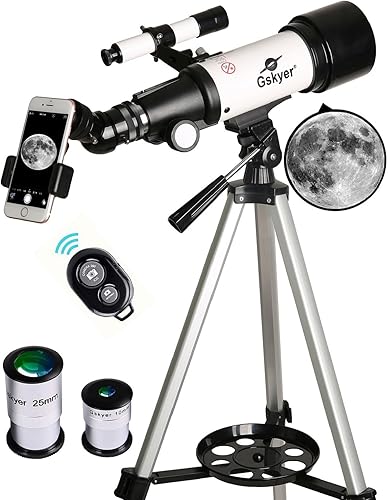
- 70mm aperture
- Carry bag
- Smartphone adapter and wireless remote
- Adjustable tripod
The carry bag fits the telescope and tripod, while a phone adapter and wireless remote support phone-based images. Consider it if those accessories matter more than minimizing carry weight.
Pros
- Carry bag included
- Phone adapter and wireless remote included
- Adjustable tripod
Cons
- Heavier than the Celestron travel refractors
- Tripod needs packing space
The Gskyer 70mm AZ Refractor suits a buyer who wants a carry-bag kit with phone accessories. It includes a smartphone adapter, wireless camera remote, adjustable tripod and carry bag.
The 70mm aperture and 400mm focal length make it a compact refractor for lunar, planetary and daytime viewing. It also comes with two eyepieces and a 3x Barlow lens, so you can change the eyepiece setup for different views.
At 5.7 lb, it is heavier than the Celestron Travel Scope models here. The carry bag helps keep the telescope and tripod together, but it's not the lightest choice for carrying on foot.
Choose it if the wireless remote and adjustable tripod are useful to you. If minimizing carry weight matters more, the Celestron Travel Scope 70 DX is lighter and also includes phone photography accessories.
Celestron FirstScope Signature Series Moon: Best for a very small tabletop scope
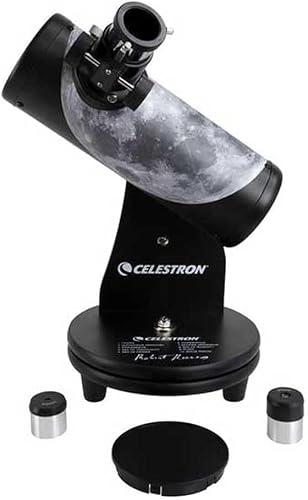
- 76mm aperture
- Tabletop Dobsonian mount
- 4.3 lb
- Custom Moon map wrap
At 4.3 lb, this small tabletop Dobsonian is easy to carry and store. Its Moon map wrap and included lunar guide make it a focused choice for learning lunar features.
Pros
- Lightweight tabletop design
- Custom Moon map wrap
- Simple Dobsonian movement
Cons
- No finderscope included
- Smaller aperture than the other tabletop reflectors
The FirstScope Signature Series Moon is a small tabletop choice for lightweight storage and lunar learning. It weighs 4.3 lb, has a 76mm aperture and features a custom wrap that highlights lunar features.
Its Dobsonian mount is simple to move by hand, and the compact shape can fit on a shelf when not in use. Celestron also includes a lunar landscape guide, so this model has a clear Moon-focused angle.
A finderscope is not included, which matters if you want extra help aiming at objects. Its smaller aperture also puts it below the larger reflectors for buyers who want more light-gathering room.
Choose it for a light scope that can stay in a small room or travel in a car. If you're planning to focus on lunar observing, our guide to telescopes for Moon viewing can help you compare other options.
Celestron Travel Scope 70 DX: Best for phone photos on the go

- 70mm refractor
- Backpack included
- Smartphone adapter and Bluetooth remote
- Moon filter included
The DX kit adds a smartphone adapter, Bluetooth remote, 2x Barlow lens and Moon filter to a travel-ready refractor. Its 3.3 lb weight is the lightest among these picks.
Pros
- Lightest pick here
- Backpack included
- Phone adapter, remote and Moon filter included
Cons
- 70mm aperture
- Tripod takes more room than a tabletop base
The Travel Scope 70 DX is the lightest pick here at 3.3 lb. Its 70mm refractor comes with a backpack, smartphone adapter, Bluetooth shutter remote, 2x Barlow lens and Moon filter.
Those accessories make it a convenient travel kit if you want to try phone images through the eyepiece. The included tripod supports a setup away from home, while the backpack helps keep the components together.
Its 70mm aperture is suited to buyers who value low weight and included accessories over the larger aperture of a tabletop reflector. The tripod also needs packing space, even though the scope itself is light.
Choose the DX if phone accessories and a light carry kit are your priority. If you don't need those add-ons, compare the standard Travel Scope 70 and its included backpack.
What should you check before choosing a portable telescope?
Check the telescope's complete carry weight, packed shape and support needs before deciding. A light optical tube can still require a tripod or a sturdy table at the viewing spot.
For a tabletop reflector, consider whether you'll have a stable surface where you plan to observe. For a tripod refractor, make sure the tripod and accessories fit the bag or vehicle space you have.
A telescope with a larger aperture may be a better fit for home storage and car travel than for walking to a campsite. For a small apartment, compare where the base or tripod will live between observing sessions.
Think about daytime use as well. The Travel Scope 70, Travel Scope 80 and Travel Scope 70 DX are suited to daytime scenery as well as night viewing, according to their product descriptions.
Is a tabletop Dobsonian or a backpack refractor easier to travel with?
A tabletop Dobsonian avoids carrying a full-height tripod, while a backpack refractor includes its own tripod for places without a suitable table. The easier choice depends on the surface and packing space available at your destination.
The Heritage 150 and 130 offer 150mm and 130mm apertures in collapsible tabletop designs. The StarSense Explorer 114AZ has a lighter 12.6 lb tabletop package and app-guided aiming.
The Celestron Travel Scope 70 and 80 include backpacks and tripods, and the Gskyer 70mm AZ also has a carry bag. The Travel Scope 70 DX is the lightest of the listed models, with phone accessories included.
For practical setup advice once you choose, read how to set up a telescope for the first time. It can help you prepare your observing spot before your first night out.
Which portable telescope should you choose?
Choose the Heritage 150 if you want the largest aperture here and have a sturdy surface for its tabletop base. Pick the Heritage 130 for a fully assembled tabletop option, or the StarSense Explorer 114AZ if phone-guided aiming would help you locate targets.
For a backpack-and-tripod kit, choose the Travel Scope 70 for simple packing or the Travel Scope 80 for the largest aperture among the travel refractors. Choose the Travel Scope 70 DX when low weight and phone accessories matter most.
The best portable telescope is the one that fits both your packed gear and your observing spot. Match the aperture and support style to how you'll travel, then use the telescope buying guide to compare the other choices that matter to you.
Our top 3 picks at a glance
-
1
Best for compact aperture
Sky-Watcher Heritage 150 Tabletop Dobsonian
8.6/10 our score
See it on Amazon -
2
Best for ready-to-use tabletop viewing
Sky-Watcher Heritage 130 Tabletop Dobsonian
8.5/10 our score
See it on Amazon -
3
Best for app-guided aiming
Celestron StarSense Explorer 114AZ Tabletop
8.3/10 our score
See it on Amazon
Frequently asked questions
What makes a telescope portable?
A portable telescope is easy to carry, pack or store for the places you plan to observe. Some use a compact tabletop base, while others include a tripod and backpack.
Check the telescope's weight and packed shape, then consider whether you'll have a stable table or need to carry a tripod.
Are tabletop telescopes good for travel?
Tabletop telescopes can travel well because their base and tube form a compact package. They need a steady surface, such as a sturdy table, at the observing spot.
If you expect to observe in places without a suitable surface, a tripod model may be easier to set up.
Is a refractor or reflector better for a portable telescope?
A refractor with a tripod can suit travel that includes daytime scenery or places where you want a full-height support. A tabletop reflector can offer a larger aperture in a compact base, but needs a stable surface.
Choose by your packing space and observing setup.
Can you use a travel telescope in the daytime?
Some travel refractors in this guide are described for daytime scenery as well as night viewing. The Celestron Travel Scope 70, Travel Scope 80 and Travel Scope 70 DX are examples.
Never aim a telescope near the Sun.
How much aperture do you need in a portable telescope?
Choose the largest aperture that still fits your carrying and setup needs. The picks here range from 70mm refractors and a 76mm tabletop telescope to tabletop reflectors with 114mm, 130mm and 150mm apertures.
A larger scope can also mean a heavier package or a need for a sturdy support.



