How to Set Up a Telescope for the First Time
To set up a telescope for the first time, secure the tripod or base, attach the tube if needed, align the finder, and focus with a low-power eyepiece on a distant daytime target well away from the Sun. At night, start with the Moon when it is visible.
On this page (9 sections)
- What do you need before setting up a telescope?
- How do you assemble the mount and optical tube?
- How do you attach and align the finder?
- Which eyepiece should you use first?
- How do you focus a telescope for the first time?
- What should you check before observing at night?
- Why is the telescope view upside down or hard to find?
- What should you do if setup still feels difficult?
- What's the simplest first-night setup routine?
To set up a telescope for the first time, make the base stable, attach the optical tube if needed, align the finder, and practice focusing on a distant daytime object well away from the Sun. At night, begin with a low-power eyepiece and an easy target such as the Moon.
A simple order helps: assemble the support, secure the tube, align the finder, then focus. Follow the telescope manual for model-specific parts and assembly.
What do you need before setting up a telescope?
You need the telescope, its manual, and a stable observing spot with enough room to point safely. Choose a distant daytime target well away from the Sun for practicing alignment before dark.
Set a tripod on firm, level ground or a tabletop base on a sturdy, level table or platform. Avoid loose gravel, sloped surfaces, or a spot where people may bump the support.
Keep small parts together while assembling. Remove lens caps only when you are ready to observe, and keep dust covers handy.
How do you assemble the mount and optical tube?
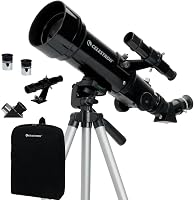
Build the mount or base first, then attach the optical tube as the manual shows, unless your telescope arrives assembled. Tighten knobs enough to hold the tube securely, but don't force threads or clamps.
For a tripod, spread and lock the legs, then adjust the height before attaching the tube if the manual allows. A tabletop Dobsonian needs a sturdy, level surface with room for the base to move.
The Celestron AstroMaster 70AZ has fully coated 70mm optics and a manual alt-azimuth mount with a panhandle for moving up, down, and side to side.
Check that the mount moves smoothly and that the tube stays where you point it. If it slips or binds, stop and check the assembly rather than tightening parts at random.
The Sky-Watcher Heritage 130 Tabletop Dobsonian has a tabletop base and a collapsible design. Set it on a firm surface, then follow its manual to prepare it for observing.
How do you attach and align the finder?
Secure the finder in its bracket as the manual shows, then align it with the telescope on the same distant object. This makes the finder useful for aiming at night.
In daylight, point the telescope at a stationary object far away, such as a sign or building edge. Never look at the Sun through the telescope or finder, and keep your practice target well away from it.
Insert the lowest-power eyepiece, center the object in the main view, then adjust the finder until its aiming point rests on that object. Recheck the eyepiece and finder, and repeat if the object shifted.
The Celestron StarPointer Red Dot Finder has adjustable dot brightness and keeps the sky right-side up. It includes a mounting base and a CR2032 3V battery.
Both telescopes mentioned above include a red dot finder, so you don't need to add one for their first setup. Keep the dot dim at night, and see telescope red dot finder setup and alignment for more help.
Which eyepiece should you use first?
Start with the eyepiece with the larger millimeter number, which gives lower magnification with the same telescope and usually makes a target easier to locate. Center and focus the target before switching to a shorter focal-length eyepiece.
The Celestron AstroMaster 70AZ includes 20mm and 10mm eyepieces. The Sky-Watcher Heritage 130 Tabletop Dobsonian includes 25mm and 10mm eyepieces.
Fit any required diagonal as your manual directs, then insert the eyepiece into its holder and secure it gently. To change eyepieces, release the holder's screw or clamp, swap the eyepiece, and secure it again.
Higher magnification does not always improve the view. If the image dims, shakes, or becomes harder to focus, return to the larger-number eyepiece.
Our guide to telescope eyepieces explained for beginners covers what the numbers mean and how to choose between them.
How do you focus a telescope for the first time?
Look through the eyepiece and turn the focus control slowly until the target's edges look sharp. Start with a distant stationary object well away from the Sun.
If the view is blank, check that you removed the caps from the front of the telescope and the eyepiece. Keep your eye close enough to see the full view, but don't press it against the glass.
A blurry image can mean the focus needs adjusting or the telescope is still settling to the outdoor temperature. Make small focus changes and allow time outside before judging the view.
If the object drifts away, gently re-center it with the mount. An alt-azimuth mount moves up and down and side to side, so use small, controlled movements.
What should you check before observing at night?
Check that the telescope is steady, the finder is aligned, and the eyepiece is secure. Give your eyes time to adjust to the dark and begin with a bright, easy target.
Move away from bright outdoor lights where practical. Let your eyes adapt, and avoid staring at a bright phone screen between observations.
The Moon is a useful first target because it is bright and easy to recognize. If you're unsure what the telescope can show, see what you can see with a 70mm telescope.
Never aim at or near the Sun during this setup routine, even when it is partly hidden or close to the horizon. Looking at the Sun through a telescope or optical finder can cause permanent eye damage.
Why is the telescope view upside down or hard to find?
An upside-down or reversed view can be normal, depending on the telescope and diagonal. That orientation alone doesn't mean the telescope is assembled incorrectly.
If you can't find a target, use the finder to aim at a bright object, then look through the low-power eyepiece. Make small mount adjustments while looking through the eyepiece until the target enters the view.
If the main view is sharp but the finder isn't aligned, repeat the daytime alignment steps. For more on image orientation, read why a telescope image can look upside down.
What should you do if setup still feels difficult?
Return to the simplest setup: stable base, secure tube, low-power eyepiece, and a distant target well away from the Sun. Change one thing at a time so you can tell what improved the view.
Check the manual if a part doesn't fit or a control behaves differently than expected. Stop observing before adjusting attachments, and don't force a connection.
If you are still choosing a telescope, the telescope buying guide for adults and families explains common designs and what to consider. For a newly assembled telescope, use the setup and care guide for related maintenance and setup topics.
What's the simplest first-night setup routine?
A reliable routine for setting up a telescope is steady the base, secure the tube, align the finder, start with the largest-number eyepiece, and focus slowly. Practice during daylight well away from the Sun, then choose the Moon after dark when it is visible.
Pick the Celestron AstroMaster 70AZ if you want a tripod-mounted refractor with a manual panhandle mount. Pick the Sky-Watcher Heritage 130 Tabletop Dobsonian if a tabletop design suits your space.
Consider the Celestron StarPointer Red Dot Finder if your telescope needs a finder and its mounting arrangement fits. The beginner telescope guide can help you compare models before your next observing session.
Frequently asked questions
What should I look at first after setting up a telescope?
Start with a distant stationary object in daylight, well away from the Sun, then try the Moon at night when it is visible. Begin with the eyepiece that gives lower magnification, center the target, and focus slowly before trying a higher-power eyepiece.
Should I set up a telescope indoors or outside?
Set it up outside on firm, level ground, with a sturdy support for a tabletop telescope and room to move around. Let the telescope adjust to the outdoor temperature before judging the view, and avoid warm roofs, vents, or pavement that can make the image shimmer.
How do I align a red dot finder?
In daylight, point the telescope at a distant stationary object well away from the Sun and center it in the eyepiece. Adjust the finder so its dot rests on the same object, then recheck through the eyepiece and repeat if the telescope moved.
Which eyepiece should I use first?
Start with the eyepiece that has the larger millimeter number, which gives lower magnification with the same telescope and a wider view in many cases. Center and focus the target before trying a shorter focal-length eyepiece, then adjust the focus again as needed.