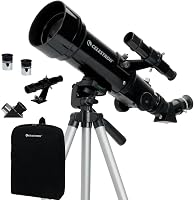
8 Best Telescopes Under $500 (November 2026)
The best telescopes under 500 dollars include the Sky-Watcher Heritage 150 Tabletop Dobsonian for compact aperture, the Celestron StarSense Explorer 130mm Tabletop for phone-guided tabletop, and the Celestron StarSense Explorer DX 130AZ for tripod phone guidance.
On this page (7 sections)
- How we chose the best telescopes under 500 dollars
- How do these telescopes under 500 dollars compare?
- Which telescope under 500 dollars fits each observing style?
- What should you look for in a telescope under 500 dollars?
- How do you set up and care for a new telescope?
- What common buying mistakes should you avoid?
- Which telescope under 500 dollars should you choose?
The best telescope under 500 dollars for most beginners is the Sky-Watcher Heritage 150 Tabletop Dobsonian, which pairs a large parabolic mirror with a collapsible tube. Choose a StarSense Explorer model for phone guidance, or the computerized Celestron 114LCM if you want the mount to locate objects after alignment.
A telescope’s aperture, mount and setup shape the experience. The biggest mirror is not automatically the easiest choice if you lack a sturdy table or prefer a full-height tripod.
For a broader comparison of optical designs and mounts, start with our telescope buying guide. If this is your first scope, our easy-to-use telescopes for beginners guide focuses on simple setup and aiming.
Our picks at a glance
-
1
 Best for compact aperture
Sky-Watcher Heritage 150 Tabletop Dobsonian
8.6/10 our score
See it on Amazon -
2
 Best for phone-guided tabletop
Celestron StarSense Explorer 130mm Tabletop
8.3/10 our score
See it on Amazon -
3
 Best for tripod phone guidance
Celestron StarSense Explorer DX 130AZ
8.2/10 our score
See it on Amazon
- 4
 Check it
Celestron StarSense Explorer 114AZ Tabletop
Best for guided small spaces - 5
 Check it
Celestron StarSense Explorer DX 102AZ
Best for refractor beginners - 6
 Check it
Celestron 114LCM Computerized Reflector
Best for automatic object finding - 7
 Best for equatorial learnersCheck it
- 8
 Best for bundled accessoriesCheck it
How we chose the best telescopes under 500 dollars
The best telescope under 500 dollars should suit your observing space, comfort with setup and preferred way to find targets. We compared each model’s aperture, optical design, mount, included accessories and guidance features against those needs.
We gave more weight to useful aperture and a mount that fits the likely observing style. App guidance and computerized pointing can make target finding easier, but they add steps and depend on choices such as phone compatibility or alignment.
Our scores reflect how each model’s features fit this roundup. We considered the balance of aperture, mount style, target finding and included equipment, rather than treating one specification as the deciding factor.
A larger aperture can collect more light, but it cannot remove clouds, atmospheric blur or city glow. Your view also depends on focus, the target’s position and the observing conditions.
How do these telescopes under 500 dollars compare?
These telescopes differ most in aperture, support style and target finding. Choose the mount and setup first, then decide whether app guidance or computerized pointing fits the way you want to observe.
| Product | Best for | Aperture | Focal length | Mount | Our score |
|---|---|---|---|---|---|
| Sky-Watcher Heritage 150 Tabletop Dobsonian | compact aperture | 150mm | 750mm | Tabletop altazimuth | 8.6 |
| Celestron StarSense Explorer 130mm Tabletop | phone-guided tabletop | 130mm | 650mm | Tabletop altazimuth | 8.3 |
| Celestron StarSense Explorer DX 130AZ | tripod phone guidance | 130mm | 650mm | Altazimuth with slow-motion controls | 8.2 |
| Celestron StarSense Explorer 114AZ Tabletop | guided small spaces | 114mm | 1000mm | Tabletop altazimuth | 8.1 |
| Celestron StarSense Explorer DX 102AZ | refractor beginners | 102mm | 650mm | Altazimuth with slow-motion controls | 8.0 |
| Celestron 114LCM Computerized Reflector | automatic object finding | 114mm | Motorized altazimuth GoTo | 7.8 | |
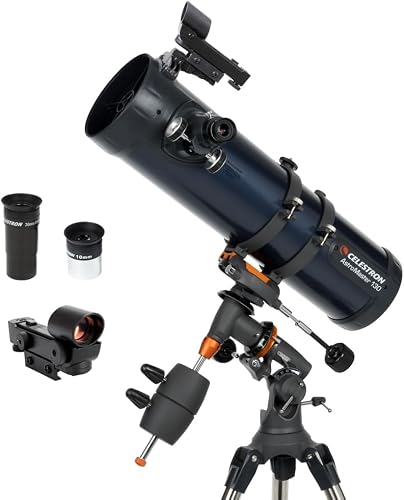
| Celestron AstroMaster 130EQ | equatorial learners | 130mm | 650mm | German equatorial | 7.6 |
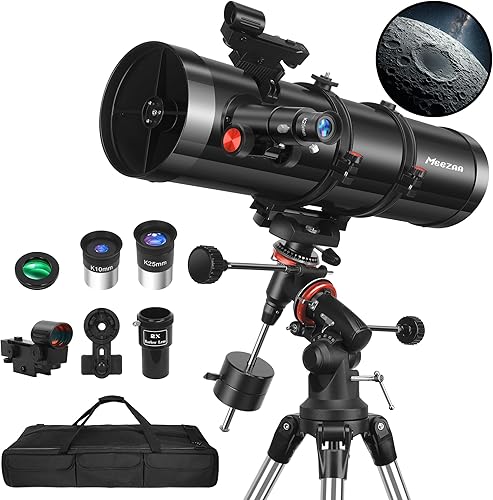
| MEEZAA 150EQ Newtonian | bundled accessories | 150mm | 650mm | Equatorial | 7.0 |
Which telescope under 500 dollars fits each observing style?
The Heritage 150 is the strongest fit here if you want a large mirror in a compact package. The other picks trade aperture, mount style or manual simplicity for guided target finding and different setups.
Sky-Watcher Heritage 150 Tabletop Dobsonian: Best for compact aperture
- 150mm parabolic primary mirror
- 750mm focal length at f/5
- Collapsible tube
- Tabletop altazimuth base
A 150mm mirror and collapsible tube make this a strong choice when you want more aperture in a compact telescope. Its tabletop base needs a firm, level surface.
Pros
- Largest stated aperture here
- Collapsible tube for storage
- Parabolic primary mirror
Cons
- Tabletop base needs a suitable support
- Manual pointing
The Heritage 150 is the top pick if you want 150mm aperture without a long fixed tube. Its collapsible design helps with storage and transport, and Sky-Watcher says the tube retains collimation when collapsed.
The parabolic primary mirror has a 750mm focal length and an f/5 ratio. The manual altazimuth base moves up, down and side to side, so you can begin without learning equatorial alignment.
This telescope needs a firm, level table or similar support. Decide where it will sit before buying, since a shaky surface makes aiming and focusing harder.
Choose the Heritage 150 for a mix of aperture and compact storage. Skip it if you need a ground-standing tripod or don’t have a stable platform for the tabletop base.
Celestron StarSense Explorer 130mm Tabletop: Best for phone-guided tabletop
- 130mm Newtonian reflector
- StarSense smartphone guidance
- Manual tabletop altazimuth base
- Includes 25mm and 10mm eyepieces
StarSense guidance helps you find targets with a compatible smartphone, while the 130mm reflector keeps the setup compact. Plan for a stable table or other level support.
Pros
- Phone guidance with target suggestions
- 130mm aperture
- Two included eyepieces
Cons
- Tabletop base needs a separate support
- Manual tracking
The StarSense Explorer 130mm Tabletop is a good fit if you want a 130mm reflector with smartphone target guidance. The app uses sky recognition to guide you toward selected objects, while the manual tabletop base keeps movement simple.
The telescope includes 25mm and 10mm eyepieces, a red-dot finder and a smartphone dock. Its compact format can work in a small observing area if you provide steady support.
Phone guidance helps you find targets, but you still move the telescope by hand. The app does not turn this mount into a motorized tracker.
Pick it if finding objects is your main concern and a tabletop setup suits your space. Skip it if you need a full-height tripod or want the telescope to track objects automatically.
Celestron StarSense Explorer DX 130AZ: Best for tripod phone guidance
- 130mm Newtonian reflector
- StarSense smartphone guidance
- Full-height tripod
- Dual-axis slow-motion controls
This 130mm reflector pairs StarSense guidance with a full-height tripod and slow-motion controls. It suits observers who want phone help without a tabletop base.
Pros
- Full-height tripod included
- App target guidance
- Slow-motion controls
Cons
- More parts than a tabletop setup
- Manual tracking
The StarSense Explorer DX 130AZ combines phone guidance with a full-height tripod. Its manual mount has dual-axis slow-motion controls, giving you a way to make small pointing adjustments after the app guides you to a target.
The tripod makes this a practical choice when a table-mounted scope does not fit your yard or observing spot. It also comes with 25mm and 10mm eyepieces, a red-dot finder and phone dock.
Like other Newtonian reflectors, it may need periodic collimation to keep its optics aligned. Read our Newtonian telescope collimation guide to understand this maintenance before choosing a reflector.
Choose this model if you want app guidance, a ground-standing setup and manual controls. Skip it if a tabletop design is easier to store or if you want fully automatic tracking.
Celestron StarSense Explorer 114AZ Tabletop: Best for guided small spaces
- 114mm Newtonian reflector
- StarSense smartphone guidance
- Manual tabletop Dobsonian-style base
- Includes 17mm and 10mm eyepieces
The 114mm reflector offers the same phone-guided approach in a compact tabletop format. Its included 17mm and 10mm eyepieces give you two starting magnifications.
Pros
- Phone guidance and target suggestions
- Compact tabletop base
- Two included eyepieces
Cons
- Smaller aperture than the 130mm and 150mm picks
- Needs a stable support
The StarSense Explorer 114AZ is a compact guided reflector with a 114mm mirror and tabletop Dobsonian-style base. Its app suggests targets for your time and location, then guides you with on-screen arrows.
Celestron includes 17mm and 10mm eyepieces, a red-dot finder and the phone dock. The low tabletop format may suit a family setup where a stable table is easier to arrange than a tripod.
Its aperture is smaller than those of the 130mm and 150mm reflectors in this roundup. That tradeoff can make sense if you value a compact scope and app-assisted target finding over a larger mirror.
Choose it for guided sessions on a sturdy table. Skip it if you want a full-height tripod or the greatest aperture in this group.
Celestron StarSense Explorer DX 102AZ: Best for refractor beginners
- 102mm refractor
- StarSense smartphone guidance
- Full-height tripod
- Dual-axis slow-motion controls
This refractor combines app guidance with an erect image diagonal and a full-height tripod. It fits buyers who prefer a refractor format and manual controls.
Pros
- Refractor optical design
- App target guidance
- Erect image diagonal included
Cons
- Smaller aperture than the reflector picks
- Manual tracking
The StarSense Explorer DX 102AZ is the refractor option among these guided tripod models. Its 102mm optics, erect image diagonal and full-height tripod suit buyers who prefer a lens-based telescope.
StarSense guides you toward targets, and the mount has dual-axis slow-motion controls for manual adjustments. Two eyepieces, a red-dot finder and a phone dock are included.
Its aperture is smaller than those of the reflectors above, so it is not the best fit if maximum light gathering is your priority. Refractors also avoid the secondary mirror arrangement of a Newtonian, which some beginners prefer.
Pick it for a guided refractor setup with a tripod. Skip it if aperture matters more than optical design, and compare the 130mm reflectors or Heritage 150 instead.
Celestron 114LCM Computerized Reflector: Best for automatic object finding
- 114mm Newtonian reflector
- Computerized GoTo mount
- Can locate 4,000 celestial objects
- Sky Tour feature
The computerized mount can locate thousands of celestial objects after alignment. Choose it if automated pointing matters more than keeping the mount fully manual.
Pros
- Computerized object locating
- Sky Tour target suggestions
- Full-height tripod
Cons
- Requires alignment before use
- More setup steps than a manual mount
The Celestron 114LCM is the pick for computerized target locating. After alignment, its motorized GoTo mount can locate 4,000 celestial objects, while the Sky Tour feature suggests objects visible in the current sky.
It includes a full-height tripod, 25mm and 9mm eyepieces, and a red-dot finder. The mount can save you from manually searching, but setup involves more steps than pointing a manual altazimuth telescope.
Its 114mm reflector has less aperture than the larger models in this roundup. Consider whether automated locating matters more than a larger mirror or a simpler manual setup.
Choose the 114LCM if you want the telescope to move toward selected objects. Skip it if you prefer to avoid alignment or want to keep the mount fully manual.
Celestron AstroMaster 130EQ: Best for equatorial learners
- 130mm Newtonian reflector
- German equatorial mount
- Right ascension and declination slow-motion controls
- 20mm and 10mm eyepieces
The 130mm reflector and equatorial mount suit buyers who want to learn right ascension and declination controls. Its pointing approach takes more learning than a simple altazimuth mount.
Pros
- 130mm aperture
- Slow-motion controls on both axes
- Full-height tripod
Cons
- Equatorial setup has a learning curve
- Manual target finding
The AstroMaster 130EQ suits buyers who want to learn equatorial mount controls. Its 130mm Newtonian reflector uses slow-motion controls for right ascension and declination.
The mount is oriented differently from a basic up-down, left-right altazimuth mount. That takes more learning at the start, while the two axes let you make precise manual adjustments as objects move.
Celestron includes a full-height tripod, 20mm and 10mm eyepieces, and a red-dot finder. The stated focal length is 650mm.
Pick this telescope if you are willing to learn equatorial setup and want manual tracking controls. Skip it if straightforward pointing is more important; a manual altazimuth model is easier to learn first.
MEEZAA 150EQ Newtonian: Best for bundled accessories
- 150mm Newtonian reflector
- 650mm focal length
- Equatorial mount
- Includes phone adapter, Moon filter and carry bag
The 150mm reflector comes with a phone adapter, Moon filter, Barlow lens and carry bag. Its accessory bundle is useful if those items match your observing plans.
Pros
- 150mm aperture
- Carry bag included
- Phone adapter and Moon filter included
Cons
- Equatorial mount takes practice
- Accessory count may matter less than mount fit
The MEEZAA 150EQ is an accessory-rich option built around a 150mm Newtonian reflector and equatorial mount. It includes two eyepieces, a 2X Barlow lens, a Moon filter, a phone adapter and a carry bag.
The extras can be useful if you want to store the telescope and accessories together or try phone imaging. The equatorial mount has slow-motion controls, though it takes practice to set up and point comfortably.
The included Moon filter is for lunar viewing only. It is not a solar filter and must never be used to look at the Sun.
Choose this model if the included accessories and 150mm aperture match your plans. Skip it if mount simplicity matters more than the bundle; a tabletop Dobsonian has a more direct manual setup.
What should you look for in a telescope under 500 dollars?
Choose a telescope under 500 dollars by matching aperture, mount and setup to where and how you plan to observe. A mount you can use comfortably matters more than a long accessory list.
Start by picturing a typical session. Decide whether the telescope will stay in a backyard, move between rooms, travel in a car or be shared by people of different heights.
How much aperture should the best telescope under 500 have?
Aperture is the diameter of a telescope’s main lens or mirror, and it affects how much light the telescope can gather. The picks here range from 102mm to 150mm, with the larger reflectors offering more aperture.
Aperture helps when you want to observe dimmer objects, but it does not guarantee a sharp view every night. Atmospheric conditions, focus, target height and light pollution also affect the image.
For many beginners, a smaller scope that is steady and easy to point will be more satisfying than a larger one that is awkward to set up. Think about where you will store it and whether you have room for its support before prioritizing the biggest mirror.
Should you choose a reflector or a refractor?
A reflector uses mirrors, while a refractor uses lenses. The 130mm and 150mm reflector picks offer larger stated apertures in this group, while the StarSense DX 102AZ gives you a refractor with an erect image diagonal.
Reflectors may need occasional collimation, which means aligning their optics. Refractors avoid that particular adjustment, though every design benefits from careful handling and a stable mount.
Use this choice to narrow the shortlist, not to pick by design name alone. If you are unsure how the designs differ in use, see our Dobsonian vs refractor telescope guide.
Is a tabletop telescope or a tripod better?
A tabletop telescope needs a sturdy, level surface, while a tripod model stands on the ground. Tabletop designs can be compact, but a low or shaky surface can make observing uncomfortable and aiming less precise.
A full-height tripod suits yards, parks and shared viewing where people may stand. It also saves you from finding a suitable table, though it takes more room to store.
Before buying, check the height and firmness of the spot you expect to use. For first-session steps, follow our first-time telescope setup guide.
Do you need app guidance or a computerized mount?
App-guided models show directions on a phone while you point the telescope by hand. A computerized GoTo mount moves the telescope toward selected targets after you align it.
If the Moon or a bright planet is your main target, manual pointing may be enough to begin. If you want help finding unfamiliar objects, a StarSense model gives directions through the app, while the 114LCM offers motorized pointing after alignment.
Think about what you want the mount to do and what setup you are willing to learn. Check that your phone meets the app’s compatibility requirements before choosing a StarSense model.
What can you realistically see through these telescopes?
These telescopes can show the Moon, planets and some brighter deep-sky objects, depending on conditions and target position. A 70mm telescope can also provide satisfying lunar and planetary views, as explained in our guide to what you can see with a 70mm telescope.
Planets appear small through an eyepiece, even when their main features are visible. A telescope does not produce the colorful, close-up views often seen in processed astronomy images.
Start with the Moon or a bright planet to learn focusing and aiming. Then use an app or sky guide to choose a bright object that is visible from your location.
How do you set up and care for a new telescope?
A steady support, careful assembly and a simple first target make a new telescope easier to use. Set it up in daylight first so you can understand its parts before observing in the dark.
Assemble the tripod or place the tabletop base on a firm, level surface. Tighten the parts as instructed and check that the tube moves smoothly before you attach any phone or accessories.
Align a red-dot finder in daylight on a distant, safe object, such as a faraway building. Keep the Sun out of the telescope’s path, and never look at it through the finder or eyepiece.
At night, begin with a low-power eyepiece and a bright target. Center it, focus slowly, and change to a higher-power eyepiece only after the view is sharp and steady.
Keep dust caps on the optics when the telescope is stored. Avoid touching lenses and mirrors, and use a clean, soft lens brush for loose dust rather than wiping an optical surface.
Newtonian reflectors may need occasional collimation, but do not adjust the mirrors unless the view or alignment calls for it. Store the telescope in a dry place, and let it come to room temperature before observing if it has been stored somewhere much warmer or cooler.
What common buying mistakes should you avoid?
The most common mistake is choosing by magnification claims or accessories alone. A stable mount, suitable aperture and comfortable setup matter more than a large number printed on an accessory.
Do not assume that a Barlow lens or short eyepiece always improves the view. High magnification makes focusing and tracking more demanding, and atmospheric blur can erase fine detail.
Another mistake is buying a tabletop telescope without a table or platform in mind. Check that your support is level, stable and at a useful height before deciding that a compact base will fit your observing spot.
Do not confuse app guidance with automatic tracking. StarSense helps you find a target, but you move those telescopes manually; the 114LCM is the computerized option here, and it needs alignment.
Finally, choose equipment that suits your usual session rather than an imagined perfect night. If you mostly observe from a city yard, an easy setup and bright targets may matter more than accessories intended for long trips to dark skies.
Which telescope under 500 dollars should you choose?
Choose the Heritage 150 if you want a 150mm mirror and collapsible tabletop design. Pick the StarSense Explorer DX 130AZ for app guidance and a full-height tripod, or the 114LCM if computerized target locating matters most.
If a compact support suits your space, the StarSense tabletop models add phone guidance, with the 130mm version offering a larger aperture than the 114mm. Choose the DX 102AZ when you want a guided refractor, and the AstroMaster 130EQ or MEEZAA 150EQ if learning an equatorial mount fits your plans.
Before you decide, think about where the telescope will sit and whether you want to learn manual aiming, app guidance or alignment. Our telescopes for backyard astronomy guide can help narrow the choice for a home observing spot.
FAQ
- q: "Is a telescope under 500 dollars good for beginners?" a: "Yes, several models under 500 dollars offer beginner-friendly features such as app guidance, tabletop bases or computerized target locating. The easiest choice depends on your space and comfort with setup.\n\nA manual altazimuth mount usually has fewer steps than a computerized or equatorial mount."
- q: "Can I see planets with a telescope under 500 dollars?" a: "Yes, these telescopes can show the Moon and planets such as Jupiter and Saturn when they are visible and conditions are steady. Expect small eyepiece views rather than the large, detailed images used in astronomy photos.\n\nMore magnification does not guarantee a clearer view."
- q: "Is a 150mm telescope better than a 130mm telescope?" a: "A 150mm aperture gathers more light than a 130mm aperture, but the better choice also depends on the mount and setup. The Heritage 150 has a tabletop base, while the StarSense DX 130AZ includes a full-height tripod.\n\nChoose the setup you can support and use comfortably."
- q: "Do I need a phone to use StarSense Explorer?" a: "StarSense Explorer uses a compatible smartphone docked to the telescope for its sky guidance. You can still point the telescope manually, but the app’s target directions are a core feature.\n\nCheck phone compatibility and app requirements before choosing a StarSense model."
- q: "Are telescope Moon filters safe for looking at the Sun?" a: "No. A Moon filter is only for lunar viewing and does not protect your eyes from sunlight.\n\nNever aim a telescope near the Sun unless you have proper solar equipment designed for that purpose."
Our top 3 picks at a glance
-
1
Best for compact aperture
Sky-Watcher Heritage 150 Tabletop Dobsonian
8.6/10 our score
See it on Amazon -
2
Best for phone-guided tabletop
Celestron StarSense Explorer 130mm Tabletop
8.3/10 our score
See it on Amazon -
3
Best for tripod phone guidance
Celestron StarSense Explorer DX 130AZ
8.2/10 our score
See it on Amazon